
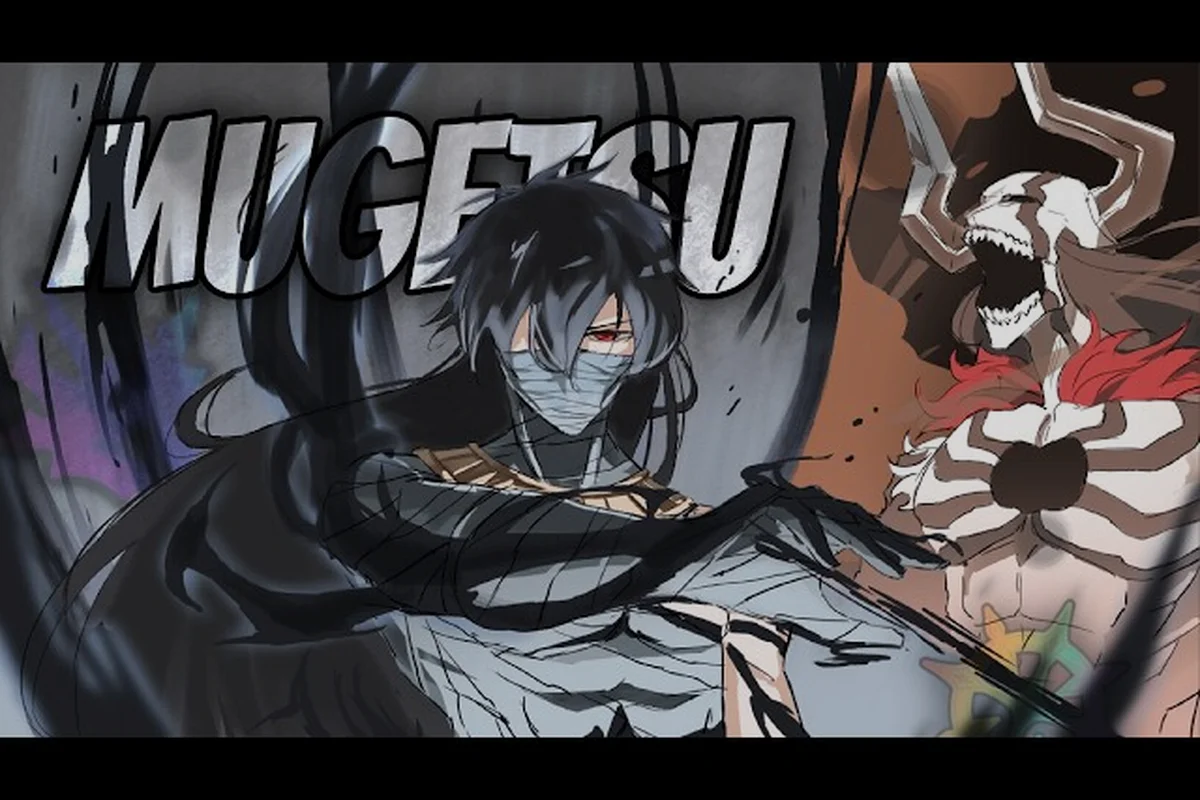
Anime Vanguards mythic units sit at the very top of the unit hierarchy, and every banner you crack open is a roll of the dice on a 0.1% Legendary pull. True Shadow Monarch, Sung Jin Woo, and a rotating cast of Mythic drops define your endgame roster, which is why tracking pity timers, banner rotations, and Shiny variants matters more than grinding endless easy stages. This guide breaks down how the rarest units actually drop, where to spend your Gems, and how to tell a genuine Shiny from a fake flex.
Understanding the Mythic and Legendary Tier System
The Anime Vanguards unit tier system runs through a clear five-rung ladder, and each rung changes how often a unit appears in your summons. Knowing where Mythic sits on that ladder — and how it overlaps with the Legendary roll pool — is the first step to planning a banner strategy that doesn't burn your Gem stockpile in a single unlucky session.
| Tier | Drop Rate (Standard Banner) | Typical Sources | Reroll Value Range |
|---|---|---|---|
| Secret | <0.05% | Limited collab banners | Top of trade tier list |
| Mythic | ~0.1% | Mythic banners, evolution rewards | 4-7× Legendary baseline |
| Legendary | ~1-3% | Standard + Mythic banners | Trading standard |
| Epic | ~10-15% | Standard banners, story rewards | Low-medium trade value |
| Rare / Common | 60%+ | Most banner slots, beginner pulls | Near-zero trade value |
The headline number — a roughly 0.1% chance of pulling a Mythic-tier unit per single summon — is what gives every banner its ceiling and its sting. According to community data pulled from banner trackers, hitting a true Mythic on a single pull is rarer than pulling a featured SSR in most gacha games, which is why pity systems and multi-pulls matter so much. A 0.1 percent unit pull in the game effectively means you need around 1,000 single summons on average to see one Mythic, and that's before you factor in featured-rate boosts on special banners.
How Mythic Drops Differ From Legendary Pulls
Mythic and Legendary units share the upper end of the banner pool, but they are not interchangeable for trading or for team-building. A Mythic is a direct evolution step above Legendary in both base stats and ceiling potential, while Legendary units are the bread-and-butter backbone of competitive rosters. Community testing suggests that Mythic units scale harder with trait rerolls and Deadeye-style damage bonuses, because their base multipliers already sit well above Legendary floors. When players discuss the best anime vanguards legendary units for mid-game progression, they usually mean the rare-but-consistent 1-3% bracket; when they discuss anime vanguards mythic units, the conversation shifts to 0.1% banners and featured collab drops.
The other important distinction is exclusivity. Legendary units rotate in and out of the standard pool, so a Legendary you skip now will likely return on a future banner. Mythic units, by contrast, are frequently locked behind limited windows, which means a skipped Mythic banner may not come back for several updates. That window-of-opportunity pressure is what drives most high-end trading and rerolling decisions around collab releases.
Shiny Variants and Visual Rarity
Shiny units in Anime Vanguards function as a visual and stat variant layer on top of the standard tier system. A Shiny is a recolored, retextured version of an existing unit that carries slightly inflated stats, a unique spawn animation, and a flex factor in lobbies. The Shiny roll is independent of the base tier pull, so a Shiny Mythic and a Shiny Legendary are both possible outcomes from the same banner session.
Players track Shiny odds separately because they stack with the base rarity. According to community reports, the base Shiny chance sits around 0.5-1% on most banners, then compounds multiplicatively with the tier pull. In practice this means a Shiny Mythic — the rarest single outcome in the game — lands somewhere in the 0.001-0.005% range per summon. The trade value of a Shiny Mythic routinely outpaces even a standard Mythic by 2-3× on the active value list because supply is brutally thin and demand is constant from collectors and flex-builders.
Featured Mythic Units: True Shadow Monarch, Sung Jin Woo, and the Collab Roster
The Mythic roster is anchored by two flagship units that almost every player recognizes: True Shadow Monarch and Sung Jin Woo. Both sit at the top of the demand curve, both pull premium trade value, and both anchor the most anticipated banner windows of the year. Understanding their kit roles and pull context helps you decide when to commit Gems and when to hold for the next rotation.
True Shadow Monarch Kit Role and Pull Context
True Shadow Monarch is the evolution ceiling of the Shadow Monarch line, which makes it one of the most sought-after anime vanguards true shadow monarch targets in the trading economy. The kit leans heavily into summon-based DPS, with a passive that buffs deployed shadows and an active that triggers a burst window when the unit reaches a health threshold. Players report that True Shadow Monarch outperforms most Legendary alternatives on Infinite Tower waves above stage 50, where the extra shadow scaling compounds.
Pulling True Shadow Monarch typically requires an evolution quest chain on the base Shadow Monarch unit, which is where the evolution guide becomes essential reading. The base form is achievable through standard banner drops, but the True variant is gated behind a Mythic-banner pull plus the completed evolution chain. According to community testing on the test realm, the evolution quest requires a combination of Memoria Shards, specific dungeon clears, and a Mythic-tier sacrifice unit, so a player chasing True Shadow Monarch is essentially committing to a multi-week banner project.
Sung Jin Woo Banner Timing and Demand
Sung Jin Woo is the other anchor Mythic and arguably the most recognizable anime vanguards sung jin woo flex unit in the game, because the Solo Leveling collab ties directly into the character IP. The kit is built around single-target burst and a self-buff stacking mechanic, which makes it a top-tier pick for boss content and for one-shot attempts on Infinite Tower breakpoints. Banner timing for Sung Jin Woo is irregular — collab banners tend to run during major update windows, with a typical availability of 2-3 weeks per appearance.
What makes Sung Jin Woo a unique pull is the trade floor. Even before a banner closes, the unit's value rises sharply on trading boards, because the window between banner debut and banner sunset is when most players liquidate duplicate pulls. Community reports suggest that Sung Jin Woo's trade value spikes roughly 40-60% during the first week of banner release, then settles as the banner ages. Smart traders save Gems for collab banners specifically so they can flip duplicate Sung Jin Woo pulls into multiple Legendary-tier trades.
Collab Roster and Limited Mythics
Beyond the two flagship units, the Mythic roster expands significantly during collab events. Anniversary dungeons, seasonal portals, and franchise collabs each introduce a small batch of limited Mythics, and most of them do not return to the standard pool after the collab window closes. A typical collab cycle adds 2-4 new Mythic units, which means a player who skips an entire collab season can fall 6-12 months behind on roster depth, according to community data from the previous two anniversary cycles.
| Mythic Unit (Example) | Banner Type | Availability Window | Estimated Trade Value (x Legendary) |
|---|---|---|---|
| True Shadow Monarch | Standard Mythic + Evo | Permanent + Evo gate | 5-7× |
| Sung Jin Woo | Solo Leveling collab | Limited (~3 weeks) | 6-8× |
| Anniversary Mythic A | Anniversary dungeon | 2-4 weeks annually | 4-6× |
| Seasonal Portal Mythic | Summer / Halloween portal | 6-8 weeks per season | 3-5× |
| Collab Guest Mythic | Franchise collab banner | One-time only | 8-12× |
The trade-value column above comes from community-reported value lists and is a moving target — actual rates depend on banner age, current meta, and active player demand. A useful habit is to check the updated value list right before any major banner, because collab demand and meta shifts can swing Mythic values by 20-30% inside a single update cycle.
Banner Types, Pity Systems, and Pull Strategy
Pulling a Mythic without a strategy burns Gems fast, because the raw odds on a single summon are brutal. Anime Vanguards gives players several banner archetypes to work with, and each one carries different pity behavior, different rate-up mechanics, and different value-per-Gem ratios. Knowing which banner to commit to — and which to skip — is the single biggest lever you have on your Mythic acquisition rate.
Standard Mythic Banner vs Limited Banners
The standard Mythic banner is always available and runs the rotating Mythic pool at base 0.1% rates. Limited banners, by contrast, feature a specific unit with boosted pull odds (typically 0.5-1% for the featured unit) and a shorter availability window. A common rookie mistake is to pull on the standard banner during a limited window, which leaves the featured rate-up on the table.
| Banner Type | Featured Rate | Pity Counter | Gem Efficiency | Best Use Case |
|---|---|---|---|---|
| Standard Mythic | 0.1% (any Mythic) | Shared, 200 pulls | Medium | Filling out roster |
| Limited Featured | 0.5-1% (specific) | Banner-specific, 100-150 | High | Targeting one unit |
| Collab Mythic | 0.3-0.5% (collab set) | Banner-specific, 150 | High | Seasonal flex / trading |
| Shiny Boost | Standard + Shiny rate-up | Shared, 250 | Low-Medium | Shiny hunters only |
Limited banners are almost always the better Gem-per-pull ratio for a specific target, but they lock you out of the broader Mythic pool. A player who wants True Shadow Monarch specifically should prioritize the limited banner where it's featured; a player who just wants any Mythic to round out the roster should sit on standard banner pity. The game's pity counter advances on every pull regardless of banner, which means even off-banner summons push your next guaranteed closer.
Pity Mechanics and the Guaranteed Pull
Anime Vanguards runs a soft and hard pity system on most banners. Soft pity typically kicks in around pull 75-90, when Mythic rates silently increase from 0.1% to something closer to 5-10% per pull. Hard pity triggers at a fixed counter — usually 150 or 200 pulls depending on banner type — and guarantees a featured or pool-Mythic drop. Community testing across multiple banner cycles shows that the average Mythic pull lands around pull 82 on limited banners, which confirms that soft pity is doing real work well before the hard floor.
| Pity Stage | Pull Count | Estimated Rate | Practical Implication |
|---|---|---|---|
| Base | 1-74 | ~0.1% | Save Gems; do not chase |
| Soft Pity | 75-149 | 5-10% (rising) | Most Mythics land here |
| Hard Pity | 150-200 | 100% guaranteed | Backup floor, not a strategy |
Reading the pity counter matters more than chasing raw volume. A player sitting at pull 60 on a limited banner should keep pulling, because soft pity is close; a player at pull 20 should save Gems for the next limited window rather than finish the banner. New players who want to understand how to get units efficiently often overlook this — they burn Gems on base-rate pulls, miss soft pity entirely, and arrive at the next banner empty-handed. The early game guide covers Gembudgeting in more detail for players who are still building their first roster.
Multi-Pull vs Single Pull Optimization
Multi-pulls (typically 10x at a discount) give you a small Gem savings per pull and a guaranteed Epic-or-better floor on the last slot. The math works out to roughly 8-10% Gem savings versus ten single pulls, plus a single guaranteed-rarity safety net. For a serious Mythic chase, the multi-pull discount adds up fast — over 100 pulls you save enough Gems for an extra 10-12 summons, which is real value.
The trade-off is loss of pull timing control. Single pulls let you stop at exactly the soft-pity window if you run out of Gems mid-pity; multi-pulls can dump you past pity by accident. Most competitive players do a mix: singles while building toward pity, then multi-pulls once soft pity is confirmed. A 50/50 single-to-multi split is a reasonable default for any banner over 80 pulls in.
How to Get Mythic Units: Drop Sources Beyond the Banner
The banner is the headline path, but it is not the only Mythic source. Several off-banner systems — dungeon shops, evolution chains, event rewards, and Memoria Shard exchanges — can net a Mythic without spending a single Gem. These off-banner sources are the backbone of free-to-play roster building, because they let you convert time investment into unit acquisitions that would otherwise cost real money on a banner pity run.
Dungeon Shop and Anniversary Rewards
Dungeon shops rotate their Mythic-tier stock on a monthly cadence, and the Anniversary dungeon specifically guarantees a Mythic selector token after full clear. A selector token is effectively a free Mythic of your choice from a curated pool, which is the single most valuable free reward in the game. Community data suggests the Anniversary Mythic selector typically offers 6-10 eligible units per cycle, with a value roughly equivalent to a 100-150 pull banner pity.
| Off-Banner Source | Mythic Type | Cadence | Free-to-Play Friendly? |
|---|---|---|---|
| Anniversary Selector | Curated pool | Annual | Yes (clear requirement) |
| Dungeon Shop | Rotating Mythic | Monthly | Yes (currency grind) |
| Evolution Chain | Evo-locked Mythic | Permanent | Yes (quest + materials) |
| Event Reward | Limited Mythic | Per event | Yes (clear + time) |
| Trade | Any Mythic | Continuous | Yes (supply permitting) |
The dungeon shop Mythic is usually 1-2 units below the top of the meta, but it's a guaranteed acquisition that does not compete with banner pity. A new player who grinds the dungeon shop every month can pick up 1 Mythic every 6-8 weeks, which is a respectable acquisition rate for free-to-play. Pair this with seasonal portal clears and you can run a Mythic every 4-5 weeks without ever touching a banner.
Evolution Chains and Material Gates
Several Mythic units are locked behind evolution chains rather than banner drops. True Shadow Monarch is the headline example, but other Mythics follow the same pattern: a base Legendary form, a unique evolution quest, and a material gate that typically includes Memoria Shards, dungeon-specific drops, and a Mythic-tier sacrifice. The evolution path is documented in detail in the evolution guide, which walks through the full chain for True Shadow Monarch and similar units.
The material gate is the real time sink. A full evolution typically requires 200-400 Memoria Shards, depending on the unit, plus a handful of dungeon-exclusive drops. Memoria Shards drop from anniversary dungeons, summer portals, and certain Infinite Tower milestones, so the evolution is a long project that benefits from sustained play rather than a single grinding session.
Trading for Mythic Units
Trading is the third major path, and it is the only one that lets you target a specific Mythic without waiting for a banner. The active value list sets the going rate, and most Mythic trades settle around 4-8× Legendary baseline depending on demand. A player with a strong Legendary roster and no Mythic aspirations of their own can liquidate Legendary duplicates into a Mythic pull through trade, which is a legitimate path for f2p players who hit a Legendary-heavy banner.
The risk in trading is value volatility. A Mythic that's hot this week can cool down after a banner rotation, and a trade made in haste can look overpriced a month later. The safer pattern is to trade for Meta-stable Mythics — units that have been top-tier across multiple updates — rather than chasing the latest flex pick.
Trait Synergies and the Shiny Pull Decision
Once you have a Mythic in hand, the next decision is which trait to roll onto it. Trait choice is often the difference between a Mythic that performs and a Mythic that underwhelms, because the base multipliers only matter when the trait bonus compounds correctly. Deadeye is a popular choice for damage-dealer Mythics, Marksman for ranged carries, and Scholar for summon-based units like True Shadow Monarch. Trait reroll crystals are a limited resource, which makes the trait-pick decision almost as important as the unit-pick decision.
| Mythic Archetype | Best Trait (Community Pick) | Reroll Priority | Notes |
|---|---|---|---|
| Burst DPS (Sung Jin Woo) | Deadeye | High | Maximizes single-target window |
| Summon DPS (True Shadow Monarch) | Scholar | High | Buffs shadow scaling |
| Ranged Carry | Marksman | Medium-High | Strong on multi-wave stages |
| Tank / Support | Bulwark / Fortress | Medium | Survives trait-agnostic |
| AOE Clear | Sovereign | Medium | Wave clear boost |
The marksman trait deep dive covers ranged-carry builds in more detail, including the reroll crystal economy and the trait-stacking interactions with Marksman and Deadeye combos. For a Mythic-focused build, the general rule is: pick the trait that compounds with the unit's base kit, then reroll until you land at least two strong sub-rolls. A Mythic with a perfect trait roll routinely out-DPSes a Mythic with a mediocre trait roll by 30-50% on benchmark stages, which is the difference between a top-tier flex and a mid-tier carry.
When to Chase a Shiny Variant
The Shiny decision is its own calculus. A Shiny Mythic is a visual flex and a stat boost, but it is also one of the rarest outcomes in the game at roughly 0.001-0.005% per summon. Chasing a Shiny is a long-term project, not a single-banner investment, and most players should treat it as a luxury rather than a priority. The exceptions are players who actively trade — a Shiny Mythic in hand can net 2-3 standard Mythics on the trade market, which is a real return for the investment if you are patient enough to wait for the right buyer.
The honest answer on anime vanguards shiny units is that they are worth chasing only if you are sitting on a large Gem stockpile (5,000+) and have already secured your core Mythic roster. Burning Gems on a Shiny chase before you have at least one base Mythic is a classic f2p trap that leaves players with a fancy recolor and no functional team.
Frequently Asked Questions
What is the drop rate for a Mythic unit in Anime Vanguards?
Base rate on a standard banner is around 0.1% per single summon, and limited banners boost the featured unit to roughly 0.5-1%. Soft pity usually activates around pull 75-90, where the rate rises sharply, and hard pity guarantees a Mythic by pull 150-200 depending on banner type. A 0.1 percent unit pull in the game is a real event, not a routine outcome.
How do I evolve True Shadow Monarch into its Mythic form?
You need the base Shadow Monarch, a completed evolution quest chain, 200-400 Memoria Shards, dungeon-exclusive materials, and a Mythic-tier sacrifice unit. The full chain is documented in the evolution guide, and the project typically takes 3-6 weeks of sustained play. Banner pulls alone will not finish the chain — you also need to clear the relevant Memoria farming stages.
Are Shiny Mythics worth chasing as a free-to-play player?
Honestly, no — not until your core roster is solid. Shiny Mythics sit at the extreme end of the rarity curve, and the Gem cost of a real Shiny chase easily exceeds what most f2p players should spend on cosmetics. A standard Mythic plus strong trait rolls outperforms a Shiny Mythic with mediocre traits in almost every practical benchmark.
How often do collab Mythic banners return?
Most collab Mythics are one-time only, which is the main driver of their high trade value. Anniversary and seasonal collabs occasionally rerun, but franchise-specific collabs like Solo Leveling typically do not cycle back. Skipping a collab banner usually means waiting 12+ months for a re-run, if one ever happens at all.
Can I trade a duplicate Mythic for multiple Legendaries?
Yes, and this is one of the cleanest trades in the game. Most Mythics settle at 4-8× Legendary baseline on the active value list, with collab Mythics going higher. A single duplicate Sung Jin Woo pull can fund an entire Legendary roster rebuild if you trade at peak demand, which is why collab-window trading is so popular with the f2p community.